Understanding Saltwater Fly Rods: Choosing the Right Tool for Florida’s Gulf Coast
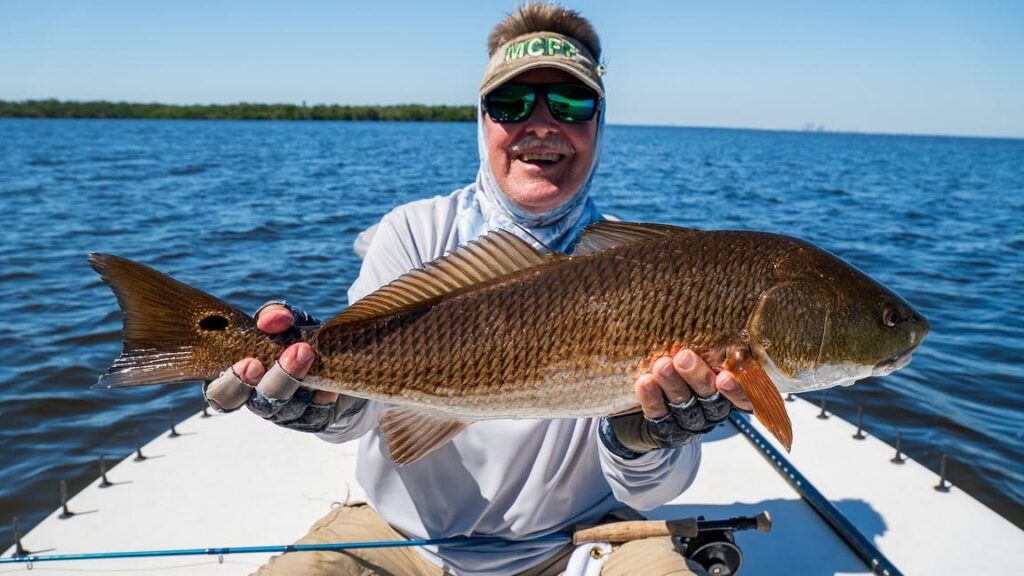
Walk into any fly shop and you’ll quickly discover there are hundreds of fly rods to choose from. Different brands, actions, tapers, lengths, and line weights all promise to be the perfect rod. For many anglers, the choices become overwhelming.
The truth is, there isn’t one “best” saltwater fly rod.
Every rod is designed with a specific purpose in mind, and every manufacturer approaches rod design a little differently. Two rods labeled as 9-foot 8-weights can feel completely different once they’re in your hands. One may load deeply with very little line outside the rod tip, while another may require significantly more line before it comes alive.
Understanding these differences is far more important than simply buying the most expensive rod on the rack.
At Tampa Bay Guide Service, nearly 95 percent of our charters are dedicated to fly fishing. After thousands of hours on the water throughout Tampa Bay, Bradenton, Sarasota, Charlotte Harbor, and Boca Grande, we’ve learned that choosing the right rod isn’t about owning the latest model. It’s about selecting a rod that matches your fishing style, your fly line, and the conditions you’ll encounter on Florida’s Gulf Coast.
Why Fly Rods Matter
A fly rod is much more than a casting tool.
It controls:
- How quickly your rod loads
- How accurately you present the fly
- How efficiently you fight fish
- How much energy transfers into the fly line
- How well you cast in windy conditions
Many anglers assume the fly line does all the work. In reality, the rod and fly line function as a system. One without the other will never perform at its full potential.
This is why we always encourage anglers to think about the complete setup rather than individual pieces of equipment.
There Is No Perfect Fly Rod
One of the biggest misconceptions in fly fishing is that every 8-weight should cast the same.
Nothing could be further from the truth.
Each manufacturer designs rods around different philosophies. Some build rods that load deeply and reward a slower casting stroke. Others create extremely fast rods designed to generate high line speed with minimal false casting.
Neither approach is right or wrong. They’re simply different.
More importantly, every rod pairs differently with various fly lines. A fly line that feels incredible on one manufacturer’s 10-weight may feel completely wrong on another.
This is one of the primary reasons we recommend matching the fly line to the rod rather than choosing a fly line based solely on its advertised line weight.
Understanding Fly Rod Action
One of the first specifications you’ll notice is rod action.
Although manufacturers classify rods slightly differently, they generally fall into three categories.
Fast Action
Fast-action rods flex primarily in the upper third of the blank.
Advantages
- Excellent in wind
- Higher line speed
- Better for larger flies
- Longer casts
- Quicker recovery
Disadvantages
- Less forgiving for beginners
- Requires proper timing
- Can feel stiff at shorter distances
Fast-action rods dominate Florida saltwater fly fishing because they excel in the windy conditions common throughout the Gulf Coast.
Medium-Fast Action
These rods flex deeper into the blank while still generating excellent line speed.
Advantages
- Smooth casting
- Forgiving
- Great presentation
- Excellent all-around choice
Many anglers find medium-fast rods easier to learn while still providing enough power for tarpon, snook, and redfish.
Moderate Action
Moderate-action rods bend throughout much of the blank.
Advantages
- Delicate presentations
- Relaxed casting rhythm
- Excellent feel
While wonderful in many freshwater situations, moderate rods are generally less common in Florida saltwater because wind and larger flies often require additional power.
Choosing the Right Rod Weight
Every species places different demands on your equipment.
7-Weight
Ideal for:
- Sea trout
- Smaller snook
- Juvenile tarpon
- Light inshore fishing
An excellent choice when presentations are more important than brute strength.
8-Weight
If we could recommend only one rod for most anglers fishing Florida’s Gulf Coast, an 8-weight would be at the top of the list.
It is incredibly versatile and capable of handling:
- Redfish
- Snook
- Juvenile tarpon
- Sea trout
- False albacore
For many anglers, the 8-weight becomes the rod that spends the most time on the deck.
10-Weight
When larger flies, stronger winds, and bigger fish become the priority, the 10-weight shines.
Ideal for:
- Large snook
- Migratory tarpon
- Permit
- Heavy wind
This is one of the most valuable rods in a serious Florida fly angler’s arsenal.
12-Weight
When targeting mature tarpon, there’s simply no substitute.
A quality 12-weight provides:
- Better lifting power
- Faster fights
- Improved fly turnover
- Greater control over fish exceeding 100 pounds
Matching Rods to Conditions
One mistake many anglers make is selecting equipment based solely on the fish they’re targeting.
Conditions often dictate rod choice just as much as species.
For example, a calm morning with tailing redfish may call for an 8-weight and a delicate presentation.
That same afternoon, when the sea breeze builds to 20 knots and you’re casting large baitfish patterns at rolling tarpon, a 10- or 12-weight becomes the better choice.
Successful fly anglers adapt their equipment to the conditions rather than forcing one rod to do every job.
Our Philosophy at Tampa Bay Guide Service
People often ask us what the “best” fly rod is.
The honest answer is that there isn’t one.
We’ve guided anglers with premium rods costing over $1,000 and others using far more affordable setups. Both have caught outstanding fish.
What matters most is how well the rod fits the angler, the fly line, and the fishing situation.
Our goal is never to recommend equipment based on marketing hype. Instead, we recommend combinations that we’ve personally fished and trusted through thousands of hours guiding across Florida’s Gulf Coast.
Every recommendation in our Fly Fishing Academy is based on practical experience, not advertising claims.
Continue Your Fly Fishing Education
Selecting the right rod is only one piece of building an effective saltwater fly fishing outfit.
Continue your Fly Fishing Academy journey with these companion guides:
- Choosing the Right Scientific Anglers Fly Line: Learn why every rod loads differently and how matching the correct fly line dramatically improves casting performance.
- Understanding Saltwater Fly Reels: Discover what matters most in a saltwater reel, from drag systems to corrosion resistance.
- Leaders & Tippet Explained: Learn how leader design affects turnover, stealth, and fly presentation.
- Water Temperature and Fish Behavior: Understand how changing water temperatures influence the movements of snook, tarpon, redfish, and other Gulf Coast species.
- Wind Direction and Fly Fishing Strategy: Learn how Florida’s prevailing winds influence fish positioning, casting angles, and boat placement.
Final Thoughts
A quality fly rod is an investment, but it isn’t the most expensive rod that catches fish. It’s the rod that inspires confidence every time you step onto the bow.
Take the time to understand how your rod loads, how it pairs with your fly line, and how it performs under Florida’s ever-changing conditions. When your equipment works together as a complete system, casting becomes more efficient, presentations become more accurate, and you’ll spend less time fighting your gear and more time focused on the fish.
At Tampa Bay Guide Service, that’s exactly what we strive to help every angler achieve.