Chapter 5: Fly Fishing Leaders & Tippet – The Complete Saltwater Guide
Introduction
Ask ten experienced fly anglers what separates consistent success from frustration, and many will point to the leader. While rods, reels, and fly lines receive most of the attention, your leader and tippet are what ultimately connect your fly to the fish. They influence how naturally a fly lands, how it moves through the water, and whether it can withstand the explosive runs of powerful saltwater species.
Whether you’re targeting snook beneath mangroves, cruising redfish on shallow flats, laid-up tarpon, or wary permit, understanding leaders and tippet will immediately improve your presentation and increase your hookup ratio.
This guide explains everything you need to know about selecting, building, and maintaining saltwater fly leaders.
What Is a Fly Fishing Leader?
A fly leader is a clear section of monofilament or fluorocarbon that connects your fly line to your fly. Unlike conventional fishing, fly line is thick and highly visible. Without a leader, fish would see the fly line, presentations would land heavily, and the fly would move unnaturally.
A properly designed leader gradually transfers the energy from your fly cast into the fly itself, allowing for accurate, delicate presentations.
A leader has three primary jobs:
- Turn over the fly smoothly.
- Create a nearly invisible connection to the fly.
- Absorb shock during powerful strikes and long runs.
Anatomy of a Fly Leader
Every fly leader consists of three primary sections.
Butt Section
The butt section is the thickest portion of the leader and connects directly to the fly line.
Its purpose is to transfer casting energy from the fly line through the rest of the leader.
A butt section that is too small struggles to turn over larger flies, while one that is too stiff may reduce presentation quality.
Mid Section
The mid section gradually tapers from thick to thin.
This taper is what allows the leader to unroll smoothly in the air instead of collapsing during the cast.
The longer the taper, the softer the presentation.
The shorter the taper, the more aggressive the turnover.
Tippet
The tippet is the final section tied directly to the fly.
This is the portion that anglers replace most often after changing flies or fighting fish.
Proper tippet selection balances stealth, abrasion resistance, and breaking strength.
Monofilament vs. Fluorocarbon
One of the most common questions among fly anglers is which material to choose.
Monofilament
Advantages:
- Less expensive
- Floats better
- Excellent knot strength
- More forgiving stretch
Best applications:
- Surface flies
- Poppers
- Gurglers
- Calm conditions
Fluorocarbon
Advantages:
- Nearly invisible underwater
- Higher abrasion resistance
- Sinks faster
- Better around oysters, docks, mangroves, and rocks
Best applications:
- Snook
- Redfish
- Tarpon
- Permit
- Subsurface flies
For most saltwater situations, fluorocarbon is the preferred choice because of its durability and abrasion resistance.
Choosing the Correct Leader Length
There is no universal leader length.
Different conditions require different setups.
7–8 Feet
Ideal when:
- Fishing heavy wind
- Casting large flies
- Fishing from a skiff
- Short, accurate presentations
9 Feet
The most versatile saltwater leader.
Excellent for:
- Snook
- Redfish
- Juvenile tarpon
- General flats fishing
10–12 Feet
Best when:
- Water is extremely clear
- Fish are pressured
- Permit are present
- Presentations need to be exceptionally delicate
Leader Strength by Species
These are excellent starting points for Florida saltwater fly fishing.
| Species | Typical Leader |
|---|---|
| Snook | 16–25 lb fluorocarbon |
| Redfish | 16–20 lb fluorocarbon |
| Tarpon (juvenile) | 20–30 lb with bite tippet when needed |
| Adult Tarpon | 60–80 lb shock tippet with an appropriate class tippet |
| Permit | 16–20 lb fluorocarbon |
| Seatrout | 12–16 lb fluorocarbon |
Adjust leader strength based on water clarity, structure, fish size, and local regulations.
What Is a Shock Tippet?
Large predatory fish can quickly destroy standard tippet material.
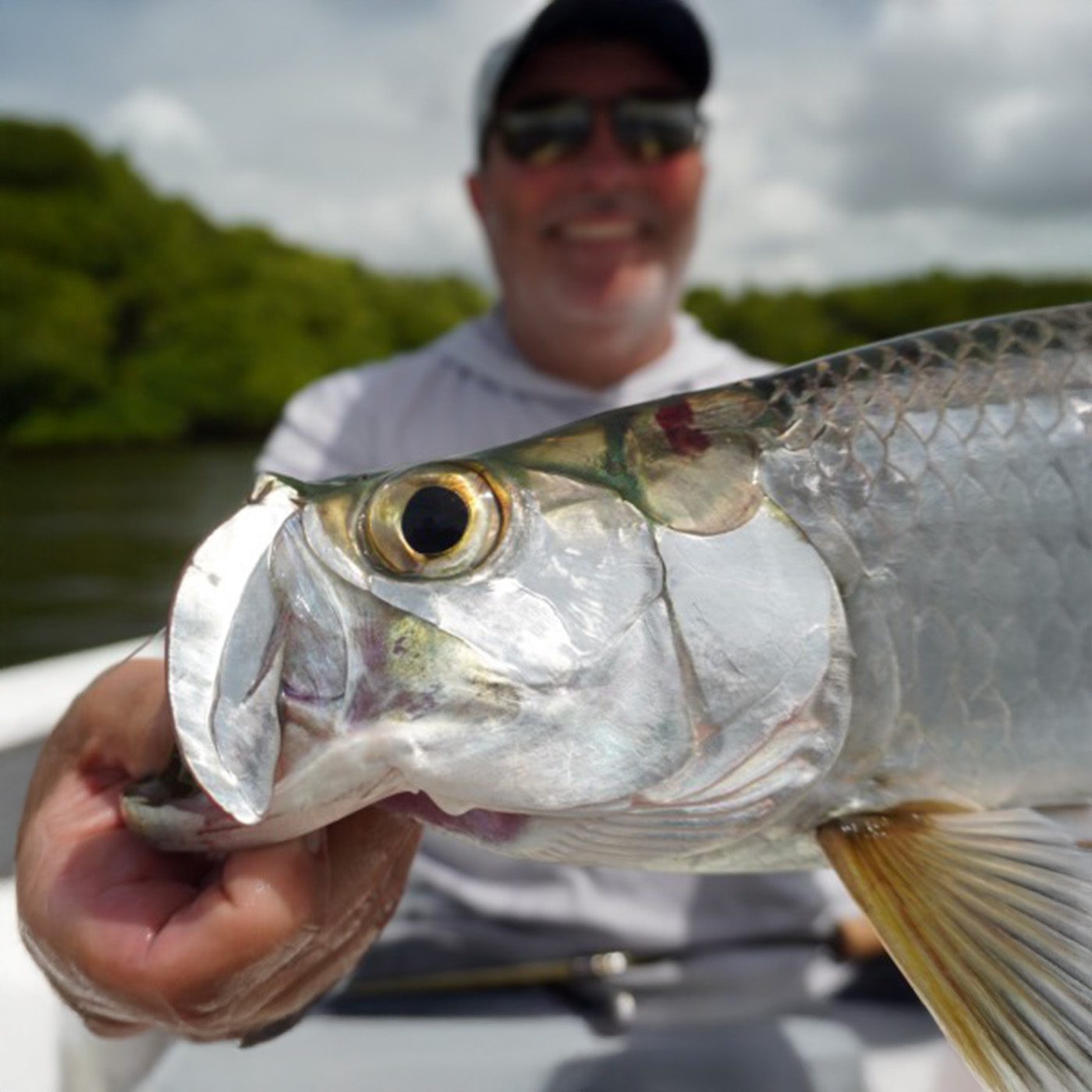
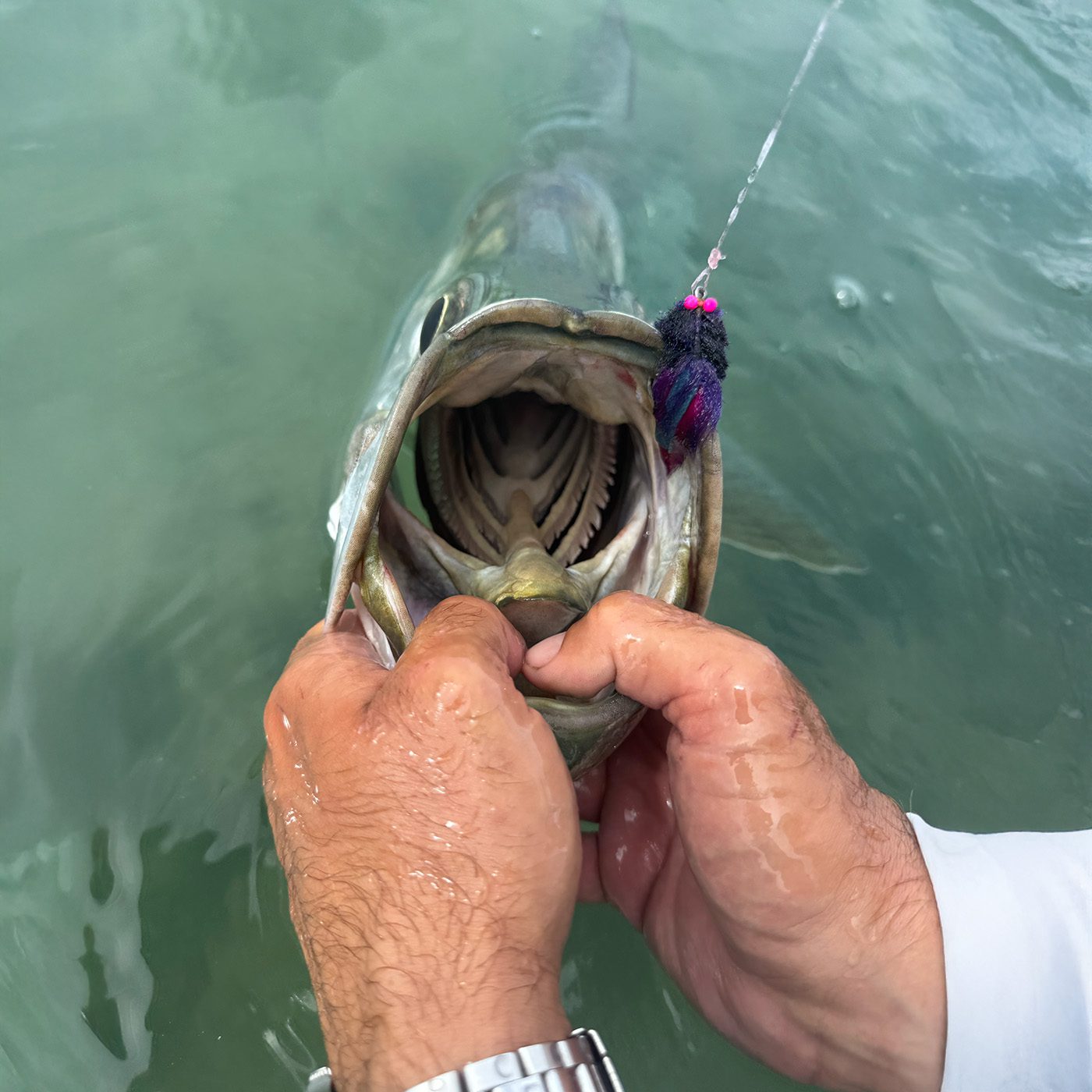
Species such as tarpon have abrasive mouths that require an additional section of heavier material called a shock tippet.
A shock tippet:
- Protects against abrasion
- Increases landing percentage
- Prevents break-offs during long fights
Tarpon anglers commonly use heavy fluorocarbon shock tippets tied to a lighter class tippet.
Knot Selection
Every connection in your leader system matters.
Recommended knots include:
- Perfection Loop
- Nail Knot
- Double Surgeon’s Knot
- Blood Knot
- Albright Knot
- Non-Slip Mono Loop
Each of these knots will be covered in detail in the Knots chapter.
Common Leader Mistakes
Many anglers unknowingly reduce their success by making simple leader mistakes.
Avoid:
- Using leaders that are too short in clear water.
- Fishing oversized tippet for spooky fish.
- Never replacing worn tippet.
- Ignoring abrasion after catching fish.
- Using floating monofilament when fluorocarbon would improve presentation.
- Forgetting to stretch a coiled leader before fishing.
Inspect your leader regularly. Even small nicks can cost you the fish of a lifetime.
Recommended Saltwater Leader Setup
For a versatile Florida setup:
- 9-foot tapered fluorocarbon leader
- Add fresh tippet as needed
- Inspect after every fish
- Replace heavily worn sections before they fail
This setup performs well for the majority of inshore saltwater species and provides an excellent balance of casting performance, stealth, and durability.
Key Takeaways
Your leader is far more than a connection between fly line and fly. It controls presentation, protects against abrasion, and often determines whether a fish is landed or lost. Understanding leader construction, selecting the proper material, and matching tippet strength to the conditions will make you a more effective fly angler.
Mastering leaders and tippet lays the foundation for the next critical skill in the Academy: tying dependable knots that hold under pressure.