Chapter 11: Fly Selection
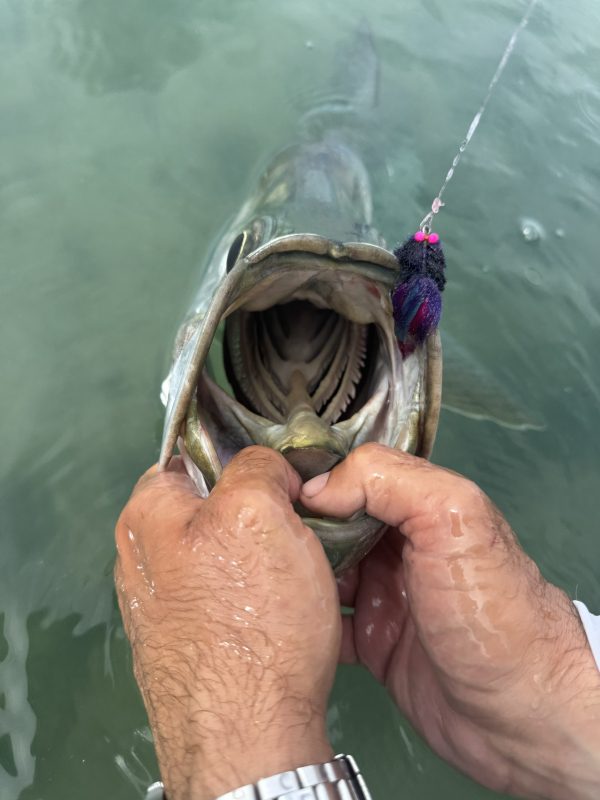
How to Choose the Right Fly for Florida Saltwater Fly Fishing
Choosing a fly can be one of the most intimidating parts of saltwater fly fishing.
Walk into a fly shop and you can find hundreds of patterns, colors, sizes, materials, and variations. It is easy to assume that becoming a successful fly angler means memorizing every pattern and knowing exactly which fly to use in every situation.
It doesn’t.
Successful fly selection is less about memorizing names and more about learning how to read the situation in front of you.
What are the fish eating? How big is it? Where are the fish feeding? How clear is the water? How much wind is there? Is the bait moving quickly or slowly? Are the fish actively feeding, or are they being selective?
Once you learn to answer those questions, choosing a fly becomes much easier.
For anglers fishing Tampa Bay and Florida’s surrounding saltwater, this skill is especially important. The region offers an incredible variety of forage and game fish, from redfish and snook in shallow water to tarpon, trout, jacks, and other predators throughout the bay and nearshore waters.
This chapter will teach you how to make those decisions.
11.1 — The Goal of Fly Selection
The goal isn’t necessarily to find an exact imitation of whatever a fish is eating.
Instead, you want to present something that gives the fish the right combination of size, shape, color, movement, and profile.
Think of fly selection as solving a puzzle.
You are trying to determine:
What is the fish looking for?
Then:
What fly can I present that looks and behaves like it?
Sometimes the answer is a perfect imitation.
Other times, a simple baitfish pattern that doesn’t exactly resemble anything in particular can be incredibly effective.
This is one of the biggest differences between learning fly fishing and simply collecting flies.
11.2 — The Four Things to Match
When selecting a fly, start with four basic characteristics:
1. Species
Different species have different feeding habits.
A redfish rooting around a shallow flat may be looking for shrimp or crabs. A snook sitting near a mangrove shoreline may be waiting for a baitfish to swim past. A tarpon may be feeding on larger bait in open water.
Knowing your target species immediately narrows your options.
2. Forage
Look at what is actually present.
- Are you seeing schools of small baitfish?
- Are shrimp jumping?
- Are mullet moving through the area?
- Are crabs crawling across the bottom?
The more closely your fly represents the available forage, the more confidence you can have in your selection.
3. Size
Size is often more important than color.
A perfectly colored fly that is twice the size of the baitfish may be ignored.
If the fish are eating two-inch bait, start by looking at flies that are approximately that size.
4. Profile and Color
Finally, consider the overall silhouette and color.
A fly doesn’t have to perfectly reproduce every detail of a baitfish. It needs to give the fish a recognizable representation of something it wants to eat.
11.3 — Match the Hatch vs. Match the Profile
Freshwater anglers often talk about “matching the hatch.”
Saltwater fly fishing can work a little differently.
There may not be one specific insect hatch to imitate. Instead, saltwater predators encounter an enormous variety of baitfish, crustaceans, and other prey.
This makes profile and behavior extremely important.
A simple white-and-olive baitfish pattern may represent several different types of forage.
Likewise, a tan shrimp pattern may not look exactly like every shrimp in the bay, but the fish can recognize the general shape and movement.
The lesson is simple:
Don’t become so focused on exact imitation that you overlook presentation.
A good fly presented correctly can outperform a perfect imitation presented poorly.
11.4 — Baitfish Flies
Baitfish are among the most important forage sources for Florida saltwater predators.
Depending on the location and season, anglers may encounter species such as pilchards, anchovies, threadfin, mullet, and other small baitfish.
This makes baitfish patterns some of the most versatile flies in a Florida saltwater fly box.
Common characteristics include:
- White or light-colored bellies
- Darker backs
- Flash
- A tapered profile
- Materials that move naturally in the water
When selecting a baitfish fly, pay particular attention to size and profile.
If you are seeing tiny glass minnows, don’t immediately reach for a six-inch baitfish pattern.
If larger mullet are present and predators are actively feeding on them, a larger profile may make much more sense.
11.5 — Shrimp and Crab Patterns
Not every saltwater predator is chasing baitfish.
Redfish, permit, and other species frequently feed on crustaceans.
When fish are feeding close to the bottom, shrimp and crab patterns can become extremely effective.
For these flies, movement is often subtle.
Rather than aggressively stripping the fly like a fleeing baitfish, the presentation may involve short movements, pauses, or allowing the fly to sit near the bottom.
Pay attention to how the natural prey behaves.
Your fly should behave accordingly.
11.6 — Fly Size
One of the simplest ways to improve fly selection is to pay more attention to size.
Before changing colors, patterns, or materials, ask:
Is my fly the right size?
If fish are feeding on tiny bait, downsizing may be the first adjustment to make.
If larger bait is abundant and predators are targeting it, increasing fly size may produce better results.
There is no universal rule that says bigger flies catch bigger fish.
The better rule is:
Match the size of the available forage whenever practical.
11.7 — Fly Color
Color matters, but it is often overemphasized.
Start by thinking about the environment.
In clear water with bright sunlight, natural colors can provide a subtle presentation.
In darker water, low light, or conditions with reduced visibility, contrast can become more important.
Common saltwater fly colors include:
- White
- Olive
- Tan
- Gray
- Chartreuse
- Black
- Orange
- Pink
Instead of thinking about one color as universally “better,” think about visibility and contrast.
A dark fly can create a strong silhouette against a bright sky.
A lighter fly may blend naturally with baitfish.
Bright colors can provide additional contrast in certain conditions.
The key is understanding why you are choosing the color.
11.8 — Water Clarity
Water clarity should be one of the first things you evaluate.
In clear water, fish may have more opportunity to inspect your fly.
This can make realistic profiles, natural colors, and subtle presentations especially useful.
In dirty or stained water, fish may rely more heavily on vibration, movement, contrast, and silhouette.
That doesn’t mean you always need a bright fly in dirty water.
Instead, ask:
How will the fish be able to find my fly?
This question is much more useful than simply memorizing a color chart.
11.9 — Depth and Presentation
A fly can be the correct size and color and still fail if it is presented at the wrong depth.
Before changing flies, determine where the fish are feeding.
Are they:
- Sitting on the bottom?
- Cruising just above the grass?
- Holding near mangroves?
- Chasing bait near the surface?
- Suspended in deeper water?
Your fly selection should take that into account.
Sometimes the correct answer isn’t a different fly.
It is simply a different retrieve or a fly that gets into the strike zone more effectively.
11.10 — Selecting Flies for Common Florida Species
Snook
Snook are aggressive predators that commonly feed on baitfish and other prey.
Baitfish patterns are an important part of a snook fly box, particularly around mangroves, structure, passes, and other areas where bait concentrates.
Redfish
Redfish can feed on shrimp, crabs, and baitfish.
When they are cruising shallow flats, look for opportunities to match the type of forage present and choose a fly that can be presented quietly.
Tarpon
Tarpon can be highly selective depending on the circumstances.
Fly size, profile, and presentation can all become important.
Because tarpon may feed on different prey depending on location and conditions, observation is critical.
Seatrout
Seatrout commonly feed on smaller baitfish and crustaceans.
Smaller baitfish patterns and shrimp-style flies can both have a place in the fly box.
Jack Crevalle
Jacks are aggressive predators and may respond well to larger, mobile baitfish patterns when actively feeding.
When selecting a jack fly, don’t be afraid to think about movement and durability as well as appearance.
11.11 — Building a Tampa Bay Fly Box
You do not need hundreds of flies to get started.
A practical Tampa Bay saltwater fly box can be built around several categories:
Small Baitfish
Carry several patterns representing small baitfish in natural colors.
Larger Baitfish
Include larger profiles for snook, tarpon, jacks, and other predators.
Shrimp
Carry natural-colored shrimp patterns in several sizes.
Crab
Include crab patterns for situations where fish are feeding on the bottom.
Dark Profiles
A few dark flies can provide a useful silhouette in different light and water conditions.
Bright/High-Contrast Patterns
These can be useful when visibility and contrast become important.
The goal isn’t to own every pattern.
The goal is to have options that cover different sizes, profiles, colors, and presentations.
11.12 — What to Do When the Fly Isn’t Working
One of the biggest mistakes anglers make is changing flies too quickly.
If a fish follows the fly but doesn’t eat it, that is valuable information.
Instead of immediately switching to a completely different pattern, make one change at a time.
Try:
- Change the retrieve.
- Change the depth.
- Change the size.
- Change the profile.
- Change the color.
- Change the fly completely.
Changing one variable at a time helps you understand what the fish are responding to.
11.13 — Common Fly Selection Mistakes
Choosing a fly because it looks good to the angler
A fly that looks impressive in a fly shop isn’t necessarily the right fly for the conditions.
Using flies that are too large
When fish are feeding on tiny bait, oversized flies can be difficult for them to accept.
Ignoring water clarity
Your fly needs to be visible enough for the fish to find while still looking natural.
Changing flies constantly
Sometimes the problem isn’t the fly.
It may be the retrieve, depth, angle, or location.
Carrying too many patterns
More flies don’t necessarily mean more success.
Understanding why you are choosing a fly is much more valuable than owning every pattern available.