Chapter 4 – Understanding Saltwater Fly Reels
Posted on August 13, 2026
How to Choose the Right Fly Reel for Florida’s Gulf Coast
Understanding Saltwater Fly Reels
Ask ten fly anglers where they would spend the most money on their equipment, and you’ll probably get ten different answers.
Some believe the rod is everything.
Others focus on fly lines.
Some insist the reel is little more than a place to store fly line.
The truth lies somewhere in between.
For many freshwater fisheries, that last statement isn’t entirely wrong. Trout rarely expose weaknesses in a reel’s drag system, and many fish can be landed by stripping line by hand.
Saltwater fly fishing is different.
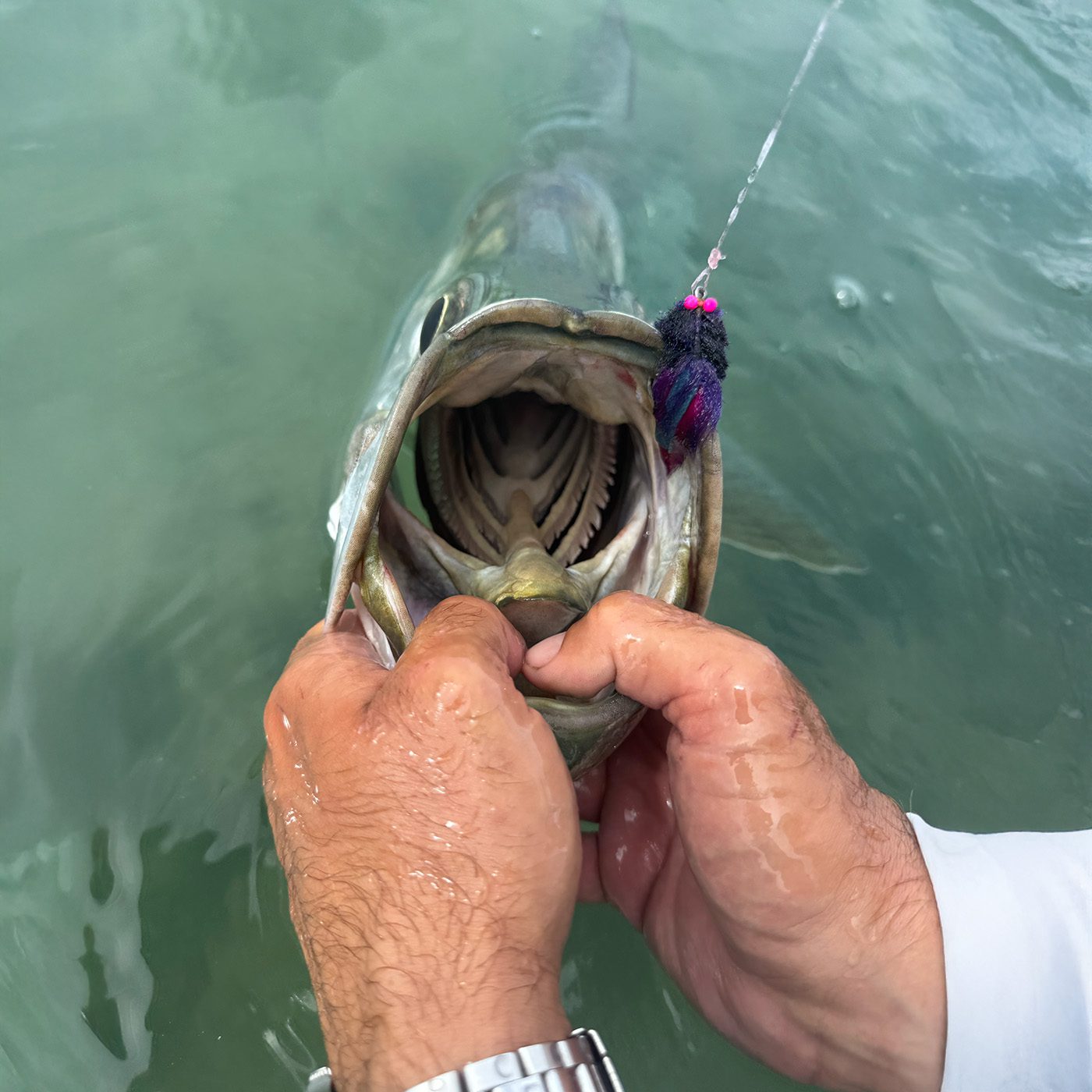
A mature tarpon can accelerate from a dead stop into a blistering run in seconds. Large snook surge toward dock pilings, while false albacore and jack crevalle can empty hundreds of yards of backing almost instantly.
When that happens, your reel stops being a line holder.
It becomes one of the most important pieces of equipment in your entire system.
At Tampa Bay Guide Service, nearly 95% of our trips are dedicated to fly fishing. After thousands of days chasing tarpon, snook, redfish, and other Gulf Coast species, we’ve learned that reliability matters far more than unnecessary features.
A great saltwater reel disappears during the fight.
It performs so consistently that you never think about it.
What Does a Fly Reel Actually Do?
A fly reel has four primary jobs:
- Store your fly line and backing.
- Balance the fly rod.
- Provide smooth, consistent drag.
- Protect your tippet during long runs.
The first two are obvious.
The last two determine whether you land fish consistently.
In Plain English
Think of your fly reel as the brakes on your truck.
You don’t notice them during normal driving.
But when something unexpected happens, you’re incredibly thankful they’re working properly.
The same is true with a fly reel.
Most of the time, it simply holds line.
When a 120-pound tarpon decides to leave the county, that’s when your reel earns its place on the rod.
Why Drag Matters
The drag system controls how much resistance a fish feels when pulling line from the reel.
Good drag systems don’t simply apply pressure.
They apply consistent pressure.
The best drag starts smoothly, remains predictable throughout the fight, and adjusts precisely as conditions change.
Jerky drag systems create sudden spikes in pressure that can break tippets, pull hooks free, or cost anglers the fish of a lifetime.
Startup Inertia
If there’s one characteristic we value above almost everything else, it’s low startup inertia.
Startup inertia is the amount of resistance required before the spool begins turning.
Imagine trying to pull a heavy piece of furniture across the floor.
It takes much more effort to get it moving than it does to keep it moving.
That’s startup inertia.
The same principle applies to fly reels.
A reel with excessive startup inertia creates a sudden shock when the fish first takes off.
A quality drag starts smoothly and protects both your tippet and your hook hold.
In Plain English
Imagine towing a boat.
Would you rather feel one massive jerk when the rope tightens, or have the load come on gradually?
Fish prefer the gradual version too.
A smooth drag protects your entire system.
Sealed Drag Systems
Florida’s Gulf Coast is unforgiving.
Saltwater.
Sand.
Heat.
Humidity.
Everything eventually corrodes.
A sealed drag keeps water, salt, and contaminants away from the internal components responsible for creating smooth resistance.
For anglers who regularly fish saltwater, a sealed drag isn’t a luxury.
It’s a necessity.
Large Arbor vs Standard Arbor
Modern saltwater reels almost universally feature large arbor designs.
Why?
Because they retrieve line faster.
Every revolution of a large arbor spool picks up more line than a smaller spool.
That matters when a tarpon suddenly changes direction or a snook charges directly toward the boat.
The faster you recover slack, the more connected you remain to the fish.
Reel Balance
Balance is often overlooked.
A reel should complement the rod—not overpower it or make it tip-heavy.
A properly balanced outfit reduces fatigue, improves feel, and creates a much more enjoyable casting experience throughout a long day on the water.
Why We Fish Abel SDS Reels
Throughout the Fly Fishing Academy, you’ll notice we avoid using the phrase “best.”
That’s intentional.
There are several outstanding saltwater fly reels on the market today.
Nautilus.
Hatch.
Tibor.
Ross.
Each produces excellent equipment.
Our preference for the Abel SDS comes from experience rather than brand loyalty.
After countless guide trips throughout Florida’s Gulf Coast, we’ve come to trust the Abel SDS because of its incredibly smooth startup, exceptionally consistent drag, outstanding machining, and long-term reliability in saltwater.
More importantly, it has earned our confidence when everything is on the line.
That’s ultimately what every piece of guide equipment should do.
Tampa Bay Guide Service’s Proven Reel Setups
8 Weight Flats Outfit
Reel
Abel SDS 7/8
Primary Species
- Snook
- Redfish
- Sea Trout
- Juvenile Tarpon
Why We Fish It
This reel perfectly complements our everyday Scott Sector 8-weight.
Its lightweight design keeps the outfit balanced while the sealed drag provides more than enough stopping power for every inshore species we routinely pursue.
10 Weight Tarpon Outfit
Reel
Abel SDS 9/10
Primary Species
- Adult Tarpon
- Large Snook
- Permit
Why We Fish It
Tarpon expose weaknesses in equipment faster than almost any other species.
The Abel SDS 9/10 combines exceptional drag smoothness with generous backing capacity, giving anglers confidence during long, high-speed runs.
12 Weight Trophy Tarpon Outfit
Reel
Abel SDS 11/12
Primary Species
Why We Fish It
When chasing fish exceeding 100 pounds, consistency becomes everything.
The Abel SDS 11/12 delivers the stopping power, capacity, and reliability we’ve come to depend on while guiding throughout Boca Grande, Charlotte Harbor, and Tampa Bay.
Common Mistakes We See
Buying a Reel Based Only on Drag Numbers
Maximum drag means very little if the drag isn’t smooth.
Ignoring Balance
A heavy reel on a lightweight rod creates unnecessary fatigue.
Not Rinsing Equipment
Even premium reels require regular maintenance after saltwater use.
Buying More Reel Than Necessary
Match the reel to your fishing—not to marketing claims.
Guide Notes
One thing we’ve learned after years of guiding is that anglers often become obsessed with maximum drag.
In reality, we’ve found that smooth startup and consistency matter far more than raw stopping power.
A drag that starts perfectly every time inspires confidence.
Confidence leads to better decisions, calmer anglers, and ultimately more fish brought to hand.
Frequently Asked Questions
Do expensive fly reels catch more fish?
No.
But reliable reels help you land more fish when conditions become demanding.
Do I need a sealed drag in Florida?
Absolutely.
Saltwater is extremely harsh on fishing equipment.
A sealed drag dramatically improves long-term reliability.
How much backing do I need?
That depends on the species.
Tarpon require significantly more backing than redfish or snook.
Always match backing capacity to your target species and reel size.
Continue Your Fly Fishing Education
Your fly reel is only one part of a complete system.
Continue learning with these chapters:
- Chapter 1 – Choosing the Right Saltwater Fly Rod
- Chapter 2 – Choosing the Right Scientific Anglers Fly Line
- Chapter 3 – How Fly Rods Actually Work
- Chapter 5 – Leaders & Tippet Explained
- Chapter 6 – Saltwater Fly Knots
Final Thoughts
A quality saltwater fly reel isn’t about flashy machining or impressive specifications.
It’s about trust.
When the fish of a lifetime eats your fly, your attention should be focused entirely on the fight—not wondering whether your drag will perform.
Choose equipment that inspires confidence, maintain it carefully, and build your fly fishing outfit as a complete system.
That’s the philosophy we follow every day at Tampa Bay Guide Service, and it’s the same approach we encourage every angler to adopt.